
Map the whole route, not just the gate
A narrow side gate does not automatically rule out tree removal, but a measurement at the entrance cannot establish how the job will work. A contractor needs to understand the route from the street to the tree, the space beneath its branches and the route back out with material. Start with a simple sketch showing the house, garage, fence, steps, sheds and tree. Mark where the route changes direction rather than drawing one straight access arrow.
Photograph the route in both directions from safe ground. A picture looking into the backyard may hide a downpipe, hot-water unit or projecting window that is obvious when looking out. Include gate hinges, latch posts, overhead pergolas and the corner behind the garage. Give actual measurements where you can take them safely, and label anything estimated. The contractor can then decide which measurements need checking on site rather than treating a photograph as a machine-access guarantee.
On a compact Officer or Cardinia Lakes block, the pinch point may be beside the house while the tree itself stands over an open lawn. An older Beaconsfield garden may have generous entry but a winding path between established planting beds. Describe your actual arrangement. The useful question is whether people, equipment and cut material can move through the entire property without relying on an obstacle being smaller, stronger or easier to remove than it really is.
Separate access to the tree from access for machinery
A person reaching a trunk does not prove that a machine can reach it. Ask the contractor to identify which equipment must enter the yard, which can remain outside and what each choice changes about handling the branches. If a proposed machine needs room to turn or set up, that space belongs on the sketch too. Avoid booking on the strength of a statement that a machine fits through a standard gate; your clear opening and route need checking.
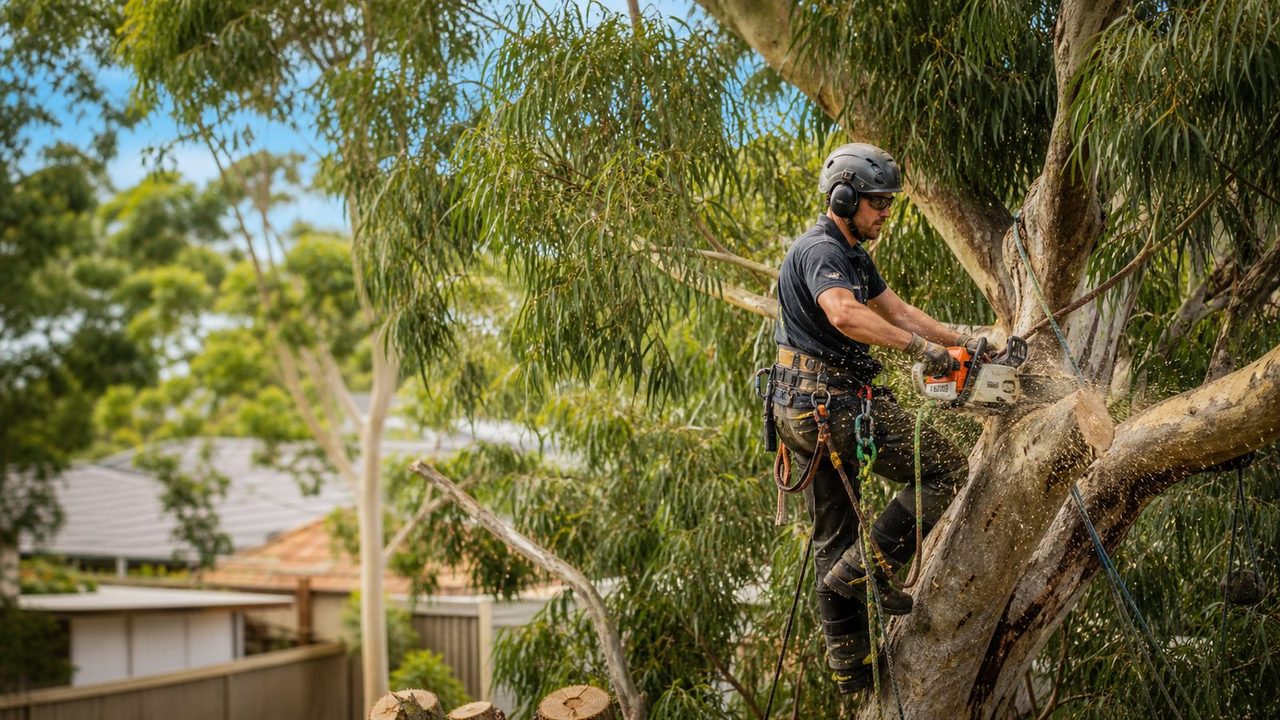
The removal method also depends on the tree itself. A contractor may consider climbing, an elevated work platform or another planned access method, but a homeowner cannot select the safe option from the ground. WorkSafe Victoria's tree-work guidance covers hazards including access equipment, climbing, cutting and overhead powerlines. Ask how the chosen method addresses your site's constraints, especially if the tree is damaged or there is no clear space underneath it.
A quote should explain the broad approach without asking you to design the rigging or cutting sequence. Useful wording identifies whether a gate panel needs removal, whether equipment will enter the yard and whether access through another property is assumed. If the contractor has only seen the tree from the street, ask whether the written price is subject to a rear-yard inspection. That distinction matters more than the brand name or advertised width of a particular machine.
Work out where the material can go
Removing a tree from a crowded backyard includes handling everything after it has been cut. Ask where branches will be gathered, where larger timber will be placed and how material will reach the collection vehicle. A lawn that appears large enough in a photograph may also be the only route for the occupants to leave the house. The work area and the household access arrangement need to be considered together before the booking is confirmed.
Tell the contractor about features that are easy to miss: a fishpond behind a hedge, glass pool fencing, irrigation risers, a lightweight shed roof or a paved strip with loose edges. Photograph their existing condition without standing beneath questionable branches. Ask which movable items you should relocate and which fixed items the contractor expects to protect. A promise to be careful is less useful than an agreed list of what remains in the work area and how it will be managed.
Decide whether you want any timber retained before comparing quotes. Keeping logs can change the handling task, but it does not remove the need for a safe cutting and placement method. Specify an accessible storage area and ask what condition the retained material will be in. Do not assume that timber left on site will be split, stacked or suitable for your fireplace. Refer to the separate mulch guide if you are also considering keeping chipped material.
Protect surfaces and existing garden features
Walk the proposed route with the contractor and distinguish cosmetic concerns from access limitations. New paving, a raised deck, a drain cover and a soft lawn are different surfaces, each needing its own discussion. Tell the contractor about known underground structures, old tanks or recent excavation. If you do not know what supports a surface, say so. Do not invite a machine across it because a car or wheelbarrow has crossed it before.
Ask what surface protection is included and where it will be placed. You may need the contractor to price a route around a garden bed or explain why a preferred route is unsuitable. Where access depends on ground condition, agree how the decision to proceed will be made. That could mean an inspection before arrival or a discussion if the route has changed. A calendar booking should not turn an unsuitable access route into an obligation to use it.
Keep protection and reinstatement separate in the scope. Protection describes the measures before and during work; reinstatement describes what happens if a gate is removed, a lawn is marked or a surface needs repair. Ask who replaces dismantled panels, whether replacement fixings are included and what is excluded. This gives both sides something concrete to check at the end instead of arguing about whether a general reference to cleanup included rebuilding part of the access route.
Neighbour access needs a separate agreement
Sometimes the practical route appears to be through the property next door. Treat that as an option to investigate, not as an entitlement or a casual favour already included in the job. The contractor needs to inspect that route as carefully as your own. The neighbour needs a clear description of where people and equipment would go, what might be moved and how the property would be secured during and after the work.
Ask for the proposed arrangement in writing before approaching the neighbour. It should identify the approximate work period, access area, protection measures and responsibility for reinstatement. Discuss pets, gates, parked vehicles and who will be present. Avoid agreeing to a tree-work date that depends on neighbour access before that access is settled. If the neighbour cannot accommodate it, ask the contractor to reassess the method rather than quietly narrowing the protection or access arrangements.
A boundary fence also needs a decision about removal and replacement. Photograph the relevant panel and posts, and record any existing movement or damage. If the fence work is part of a larger replacement project, see the fence and stump sequencing guide. Its purpose is to coordinate trades and retained trees. Questions about ownership or disputed responsibility belong in a separate conversation, supported by the neighbour-tree guide where relevant.
Check overhead constraints before discussing shortcuts
Look at the route from outside the work area and mention any visible overhead cables. Include cables crossing the driveway, entering the house or running along a boundary. Do not assume a thin cable is harmless or identify it by appearance. Tell the contractor what you can see, and leave the assessment of electrical constraints and working methods to the people qualified to make it. A photograph is useful context, not a clearance certificate.
Energy Safe Victoria advises seeking help when trees are touching or close to powerlines. Keep away from affected trees and cables, and contact the relevant electricity distributor or emergency services for an active danger. A domestic tree-work booking is not a substitute for making an electrical hazard safe. Do not move branches, raise a pole tool or try to make room for access near a line yourself.
Pergolas, awnings and roof edges are other overhead constraints to show clearly. If a contractor proposes temporary removal of a structure, ask who assesses and undertakes that work and how weatherproofing or security will be restored. Do not agree to dismantling something merely because it appears easy from below. Your role is to describe what exists and approve a clear scope; the contractor's role is to explain a feasible method and any additional trades needed.
Make the stump decision before the tree disappears
Tree removal and stump treatment are separate scope decisions. The equipment and route suitable for the canopy work may not suit the stump job. Ask whether the stump is included, whether it will be handled on the same visit and whether its access requirements have been assessed. If the answer is a later visit, keep the required route available. Installing a new gate, garden bed or pool fence between visits can change what is possible.
Explain the intended use of the space after removal. A garden bed, lawn repair and a proposed structure need different follow-up discussions. The tree contractor should identify what their stump work includes, while the relevant landscaper or builder confirms what the next stage requires. The existing stump-grinding service page introduces that service; use a site-specific written scope rather than assuming that one advertised treatment suits every future use.
Ask what remains when the quoted work is complete. That includes the visible stump, grindings, retained timber and any areas that cannot be accessed. If part of the stump is deliberately left because of an obstruction, have it identified before work starts. A homeowner can then decide whether to change the next stage, investigate another method or accept the limitation. The important point is that an access constraint should become an explicit decision rather than a surprise under a new fence.
Compare quotations on the same access assumptions
Give each contractor the same sketch, photographs and desired outcome. Ask them to state their access assumptions, the removal and stump scope, disposal arrangements and any work you must complete first. Compare those descriptions before comparing totals. Two prices may cover materially different jobs if one assumes unrestricted use of the neighbour's driveway and the other includes carrying material through your side passage. Resolving the difference first makes the price comparison meaningful.
Check the tree approval position before committing to removal. Cardinia's vegetation-removal guidance explains that controls depend on the property and vegetation. Ask who will check the applicable requirements and provide any necessary documents. An easy equipment route does not settle permission, and a difficult route does not create an exemption. Keep this approval question distinct from the contractor's practical access assessment.
At the final walk-through, use the agreed scope rather than a general impression of tidiness. Confirm that the access route is usable, dismantled items have been reinstated as agreed and retained material is in the nominated place. Note any remaining stump work and who will arrange it. Keep photographs and the written scope together so that a later landscaper or fencing contractor understands what has actually been done and what still needs attention.